
Get started with sun safety at work
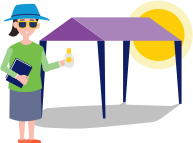
As an employer, big or small, there are things you can and should do to protect your outdoor workers from the sun.
Staff who spend all or part of the day regularly working outdoors have an increased risk of skin cancer. This is because the sun's UV is the major cause of skin cancer, including melanoma.
The good news is that UV exposure is one of the most common and most preventable workplace hazards.
Understanding the basics
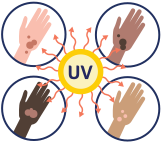
What we know about the impact of UV:
- It can damage skin even on cool or cloudy days.
- You don't feel UV exposure. Exposure is invisible and painless but still dangerous.
- Skin cancer risk comes from cumulative exposure. Small amounts can still be dangerous.
- Skin damage builds up over time, regardless of skin type.
- Workers at risk include anyone who is outside during the working day (like delivery drivers, labourers and teachers).
- Working outdoors exposes you to up to 10 times more UV radiation than indoor workers.
Did you know?
UV radiation from the sun:
- is high-energy radiation, capable of causing damage to living organisms.
- is carcinogenic to humans
- is not related to temperature
- can pass through clouds as well as loosely woven material
- can bounce of reflective surfaces such as metal, concrete, water and snow.
'The risk of exposure to solar UV radiation may not be obvious for some workers, for example vehicle drivers like taxi, bus, truck, delivery and courier services. Certain workers like physical education teachers may be in and out of the sun during the day so exposure may be intermittent. The accumulated exposure creates a risk to their health and safety.'
Why this matters for your workplace
Protecting workers from UV exposure isn't optional, it's an essential part of a safe workplace. You can read more about your WHS obligations here.
There are also productivity issues to be aware of. If workers are subjected to prolonged UV exposure, it can result in:
- sunburn
- eye damage
- long-term skin damage and premature ageing.
We know that healthy, protected workers are more reliable, present and work at their best every day.
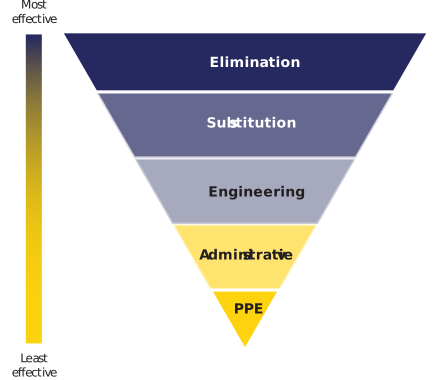
By recognising UV is a hazard, just like chemicals, noise or machinery — you can start to manage it effectively.
Hierarchy of controls
Let's get started
A sun safety policy sets out clear expectations and responsibilities for employers and individuals. Having a policy is a good starting point. It demonstrates you are committed to protecting your workers and your business.
We developed this simple policy template you can adapt for your workplace, big or small. Let's not forget, this policy is the beginning of your responsibilities, not the end!
Download the sun safety policy template
'Australia has some of the world's highest UV radiation levels, reaching extreme levels in the summer months. UV radiation from the sun is responsible for at least 95% of skin cancers in Australia. In the agricultural and construction industries in particular, workers may spend their entire work shift outdoors. This means they have a greater risk for skin cancer because of their high sun exposure over time. To protect against that risk, it is recommended that sun safe practices are implemented at workplaces such as the adoption of Slip, Slop, Slap, Seek and Slide behaviours.'